Human Foods Australian Shepherds Should Never Eat
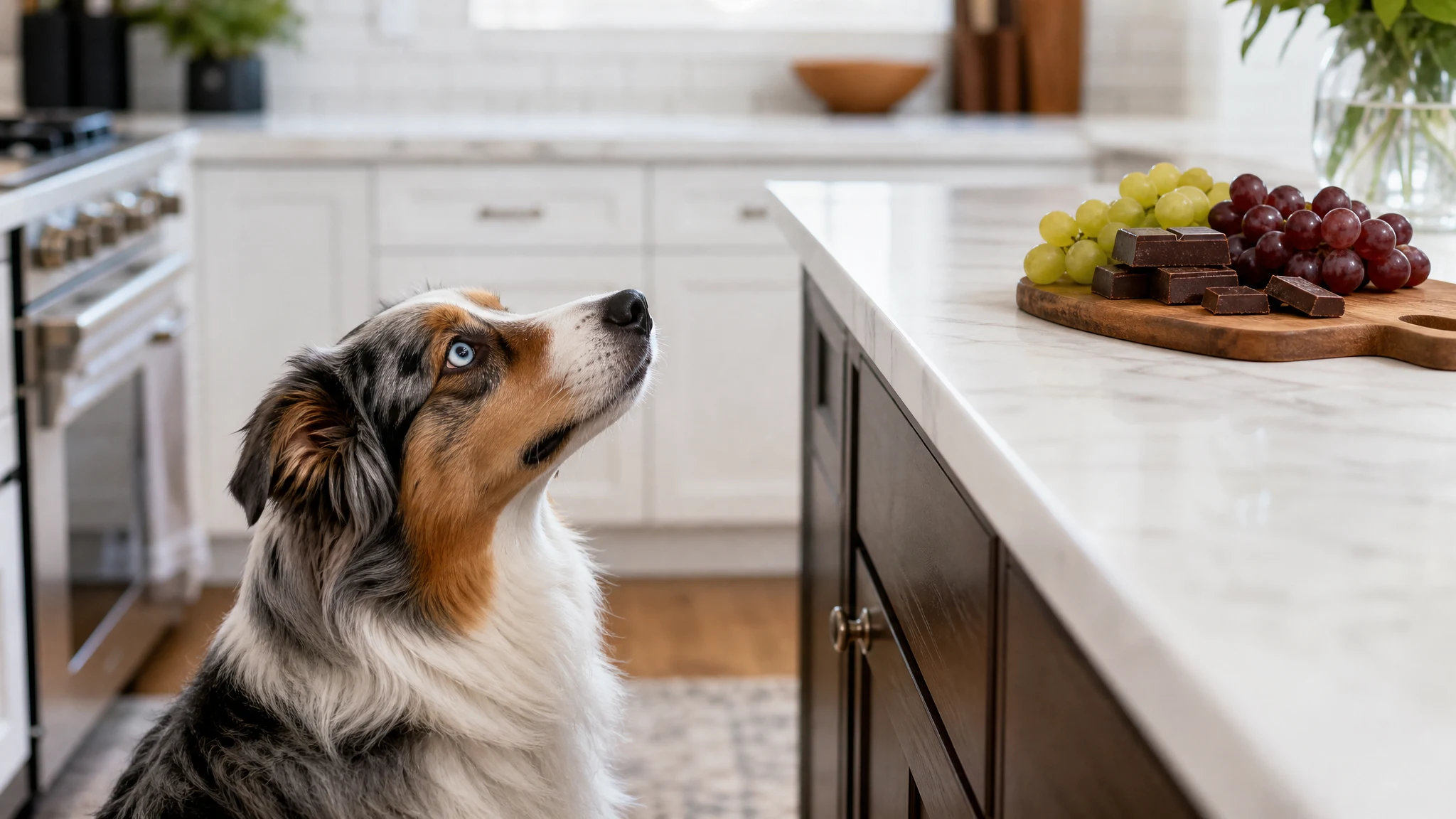
General nutrition information compiled from product labels and published sources, not veterinary advice. Your veterinarian is the right person to choose a diet for your dog, especially one with a health condition.
Aussies are quick, clever and very good at finding what fell on the kitchen floor. That makes it worth knowing which human foods dogs can't eat, and which ones are fine as an occasional snack.
The answers below are grouped by theme. The toxic-food entries follow the kinds of items the ASPCA Animal Poison Control Center lists for dogs. Nothing here replaces advice from your veterinarian, who knows your individual dog.
The Basics
What can Australian Shepherds not eat?
The ASPCA's lists for dogs include chocolate, grapes and raisins, xylitol, onions and garlic, macadamia nuts and alcohol. Cooked bones, very fatty leftovers and heavily seasoned dishes are also best avoided. The sections below explain each one.
Why are some human foods dangerous for dogs?
Dogs process some compounds differently than people do. Chocolate, onions and xylitol are all harmless to most humans but can make a dog seriously ill. Other foods cause trouble in a different way, such as rich scraps that upset the stomach or bones that splinter.
Does an Aussie's size change the risk?
Wikipedia gives the adult weight range as 35 to 70 lb, so your dog may be smaller than you expect. Size alone never makes a toxic food safe. If your Aussie eats something on the lists below, treat it as a reason to call for advice, whatever their weight.
Can Australian Shepherds eat table scraps?
Plain, unseasoned bits of safe foods are one thing. A plate of leftovers is another, because it often hides onion, garlic, butter, salt or bones. Many Aussies are energetic and may beg convincingly, so it helps to keep scraps out of the bowl altogether.
Toxic Foods
Is chocolate really dangerous for Aussies?
Yes. Chocolate contains theobromine and caffeine, which dogs handle poorly. Dark chocolate and baking chocolate are generally considered the riskier kinds, but all chocolate is better kept out of reach.
Can Australian Shepherds eat grapes or raisins?
No. The ASPCA lists grapes and raisins as dangerous for dogs and links them to kidney problems. The reason is not fully understood, so there is no known safe amount. That includes raisins hidden in cookies, cereal and trail mix.
What is xylitol and where does it hide?
Xylitol is a sugar substitute found in some sugar-free gum, candy, baked goods and a few peanut butters. It is listed by the ASPCA as toxic to dogs. Read the ingredient list on anything sweetened before it goes near your dog.
Are onions, garlic and chives bad for dogs?
Yes. Onions, garlic, chives and leeks can damage a dog's red blood cells, and cooked, raw and powdered forms all count. Watch for them in soups, gravies, baby food and seasoned meats.
Can Australian Shepherds eat macadamia nuts?
No. The ASPCA lists macadamia nuts as toxic to dogs, and they can cause weakness, vomiting and tremors. Cookies and snack mixes that contain them are just as risky as the nuts themselves.
What about alcohol and raw bread dough?
Alcohol is dangerous for dogs, including the kind in some desserts and cocktails. Raw yeast dough is also a hazard because it can swell in the stomach and produce alcohol as it ferments. Keep drinks and rising dough well out of reach.
Is caffeine a problem?
It can be. Coffee grounds, tea bags, energy drinks and some supplements contain caffeine, which the ASPCA lists as harmful to dogs. A dropped coffee filter in the trash can be as tempting to a curious Aussie as a snack.
Are cooked bones safe to chew?
Cooked bones can splinter and cause choking or injuries to the mouth and gut. Chicken bones are a common example. If you want a long-lasting chew for a busy Aussie, ask your veterinarian what they suggest.
Is fatty, salty or seasoned food a concern?
It can be. Greasy trimmings, bacon and rich holiday leftovers may upset the stomach, and a very fatty meal can lead to a serious condition called pancreatitis. Salty snacks and heavily seasoned foods are also poor choices.
Safe Snacks
Can Australian Shepherds eat carrots and green beans?
Plain carrots and green beans are commonly used as low-calorie dog snacks. Serve them plain, with no butter or salt, and cut them to a size your dog can't gulp whole. Introduce any new food slowly.
Can Aussies eat apples or blueberries?
Both are commonly given as occasional treats. Remove the core and seeds from apples first. Fruit still adds sugar and calories, so keep portions small.
Is peanut butter okay?
Plain peanut butter is a common treat, but check the label first. If xylitol appears in the ingredients, do not give it. Choose a brand that lists only peanuts, and use it sparingly.
Can Australian Shepherds eat cooked chicken or eggs?
Plain, boneless cooked chicken and fully cooked eggs are often used as training rewards. Skip the seasoning, oil and skin. Small pieces suit the quick reward cycles of positive, reward-based training.
What about milk and cheese?
Many dogs have trouble with dairy, and it can cause gas or loose stools. If you want to try a tiny piece of plain cheese, watch how your dog responds. Ask your veterinarian if you are unsure.
How much of the diet can treats be?
Treats should stay a small part of the day, with a complete and balanced food making up the rest. Use the brand's feeding guide as a starting point and adjust with your veterinarian. For a look at how complete foods differ, see our label-by-label comparison of dog foods for Australian Shepherds. We compared label data only and did not run feeding trials or taste tests.
If Something Goes Wrong
What should I do if my Aussie eats something toxic?
Contact your veterinarian or an emergency clinic right away, and consider calling the ASPCA Animal Poison Control Center. Do this even if your dog seems fine, because some signs take time to appear. Look up the current number on the ASPCA website now and save it in your phone, so you are not hunting for it later.
What information should I have ready?
Note what your dog ate, roughly how much, when it happened and your dog's weight. Keep the package or label if there is one, since it lists ingredients such as xylitol. Mention any medications your dog takes.
Should I make my dog vomit?
Do not try this on your own. Whether it helps depends on what was eaten and when, and it can cause harm in some cases. Wait for instructions from your veterinarian or poison control.
Does MDR1 matter in a food emergency?
MDR1 is a drug sensitivity that affects some herding breeds, including Australian Shepherds, according to the OFA. It is not a food issue, but it can affect which medications are safe. Tell the clinic if your dog has been tested or if you are unsure of their status.