Weight-Control Diet Foods for an Overweight Australian Shepherd
General nutrition information compiled from product labels and published sources, not veterinary advice. Your veterinarian is the right person to choose a diet for your dog, especially one with a health condition.
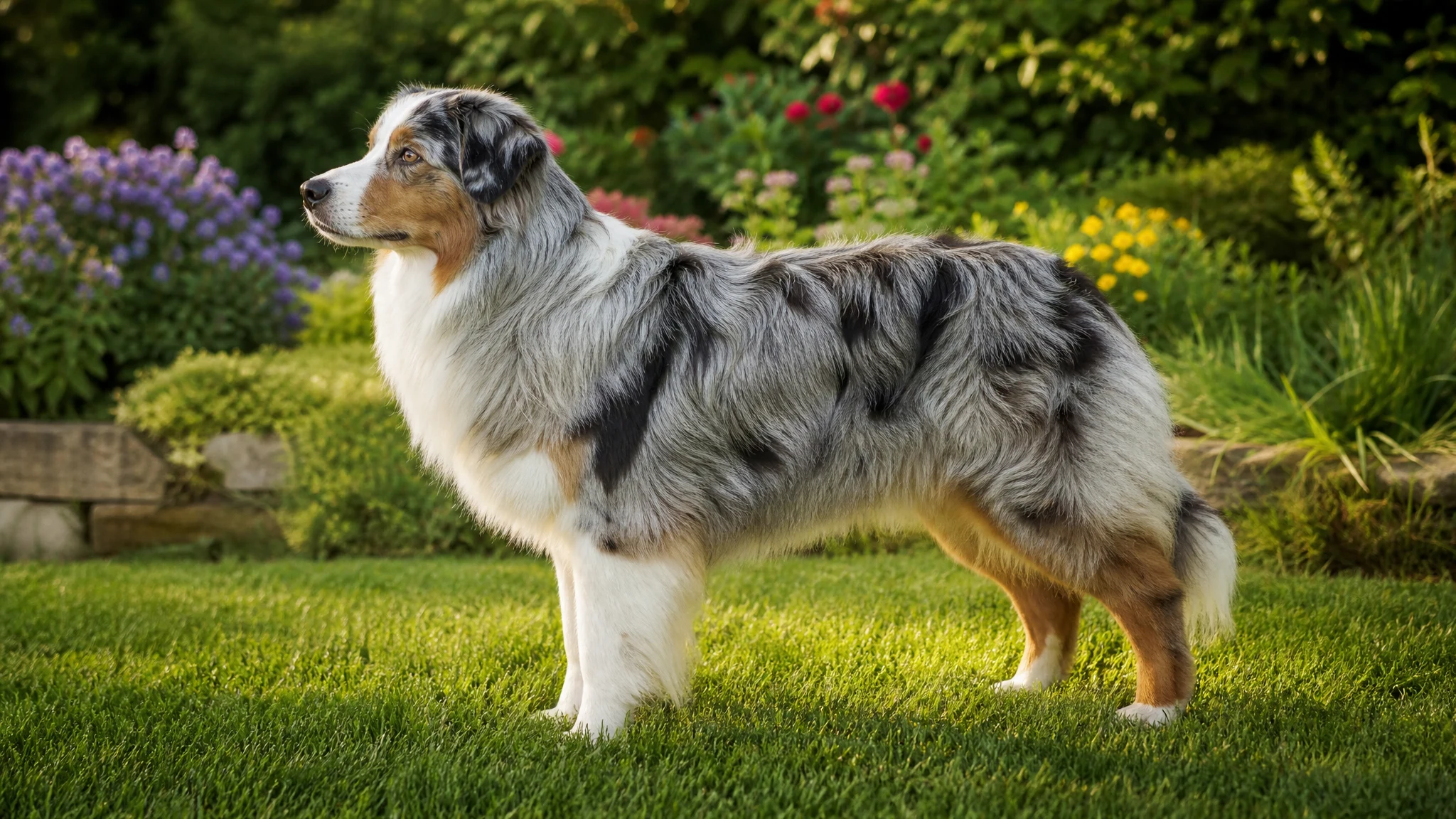
An Australian Shepherd is a medium, athletic herding dog. Wikipedia lists the adult weight range as 35 to 70 lb (16 to 32 kg). The Royal Canin breed library shows males at about 50 to 65 lb and females at about 40 to 55 lb. That is a wide range, so "overweight" depends on your dog's frame and not only the scale.
This guide shows how to compare labels and set up a steady feeding routine. It does not name a single best diet dog food for every Aussie, because no honest comparison can. It also does not replace your veterinarian, who decides the target weight and plan for your dog.
How we compared foods
We compared label data from each brand's own product page: AAFCO statement, first ingredients, guaranteed analysis and calories. We did not run feeding trials or taste tests, and nothing here says one food works better than another. No price or rating is included.
Protein, fat and fiber figures also differ in kind. Royal Canin lists guaranteed minimums and maximums. Hill's pages list typical values on a dry matter basis. Those two sets of numbers are not directly comparable, so use them only as a rough guide.
What you need
- A kitchen scale that reads in grams. Royal Canin's own feeding note says grams are the most accurate form of measurement and cups are approximate.
- A standard measuring cup, if you also want a cup reference.
- The calorie statement from your current food's bag or brand page.
- A notebook or phone note to log meals, treats and weight.
- An appointment with your veterinarian to confirm the target weight and daily calories.
- Low-calorie treats, such as a portion of the daily kibble kept aside for training.
Step-by-step: putting an overweight Aussie on a weight-control plan
1. Start with your veterinarian
Weight gain can have medical causes, and some dogs need a plan built around other health issues. Ask for a target weight and a daily calorie goal. If your vet recommends a prescription diet, that is something only a veterinarian prescribes. Follow that advice over anything on a retail bag.
One breed note matters here. The OFA explains that some herding breeds carry MDR1 drug sensitivity, which affects some medications. If a weight plan ever includes medication, remind your vet of your dog's MDR1 status. Check the OFA page below for details.
2. Work out what your dog eats now
Write down everything for one week: meals, treats, chews, table scraps, and food used for training. Many Aussies are food-motivated trainers, and small rewards add up. Weigh the kibble in grams for each meal during this week.
3. Read the calorie line, not the front of the bag
"Diet," "lite" and "active" are marketing words. The number that matters for weight control is calories per cup or per can. These figures come from the brand pages we compared:
| Food | Form | Calories stated on the brand page |
|---|---|---|
| Freshpet Fresh From the Kitchen Home Cooked Chicken Recipe | Fresh, refrigerated | 189 kcal per cup (calculated) |
| Royal Canin Medium Digestive Care | Dry | 321 kcal per cup |
| Royal Canin Medium Adult | Dry | 340 kcal per cup |
| Hill's Science Diet Adult 6+ Large Breed Chicken Meal, Barley & Rice | Dry | 352 kcal per cup |
| Hill's Science Diet Adult Large Breed Chicken & Barley | Dry | 365 kcal per cup |
| Victor Chicken Meal & Brown Rice Formula | Dry | 372 kcal per cup |
| Victor Hi-Pro Plus | Dry | 406 kcal per cup |
Cups of different foods are not equal in weight, so a cup comparison is only rough. Still, the spread is clear. Victor describes Hi-Pro Plus as a high-protein formula for active dogs, and at 406 kcal per cup it is one of the denser foods listed. An overweight, less active Aussie may not need that.
4. Consider foods made for dogs that gain weight
Among the products we compared, the only one labeled for dogs with a tendency to gain weight is the Royal Canin Weight Care Loaf in Sauce. It is a canned food with an AAFCO maintenance statement. Royal Canin lists 7.5% minimum protein, 1.1% minimum fat, 2.1% maximum fiber and 263 kcal per 13.5 oz can. The first ingredients are water, pork by-products, pork liver, chicken liver and chicken. Royal Canin says wet and dry can be fed together.
We did not find a breed-specific Australian Shepherd dry formula sold in the US. Royal Canin's Medium formulas are sized for dogs with an adult weight of 23 to 55 lb. A larger male Aussie can sit above that, so check the brand's guide for your dog's weight. Hill's large breed formulas are aimed at ideal weights of 55 to 110 lb, which fits only the biggest Aussies.
Brand pages for the other dry formulas do not show a weight-loss claim. Ask your veterinarian whether any of them suit your dog's plan.
5. Calculate the daily amount with your vet, then use the label as a starting point
Each brand publishes a feeding guide. Royal Canin's Medium Digestive Care chart, for example, is by dog weight (26 to 53 lb) and activity level. Hill's tells owners to adjust amounts as necessary to maintain optimal weight and to ask a veterinarian if unsure. Treat these tables as starting points, not prescriptions.
Feed for the target weight your vet sets, not the current weight, unless the vet says otherwise. Convert the daily amount to grams and weigh each meal.
6. Switch foods slowly
If you change foods, mix the new food into the old over about a week. Add a little more new food each day. A sudden change can upset the stomach, and that makes the diet harder to stick to.
7. Count treats inside the daily total
Take treats out of the daily kibble allowance. Use a few pieces of the regular kibble for training. For a smart, driven breed like the Aussie, a mental job such as a puzzle feeder can add engagement without adding calories.
8. Weigh and review every two to four weeks
Weigh your dog on the same scale, ideally at the vet clinic. Log the number and your dog's energy and stool quality. Share the log with your vet and adjust the plan together rather than cutting food on your own.
Tips that help
- Feed measured meals at set times instead of leaving food out all day.
- Make sure everyone in the household feeds from the same log.
- Choose walks, fetch and other exercise your vet approves. Aussies are an active breed, but a dog carrying extra weight should build up gradually.
- Use reward-based training for new routines, such as waiting at the bowl. Kind, consistent methods in line with AVSAB guidance work best.
Common mistakes to avoid
- Guessing with a scoop. A cup of one food can weigh quite differently from a cup of another.
- Ignoring treats and chews. They often explain why weight does not move.
- Cutting food too hard. Severe cuts can leave a dog short of nutrients. Let your vet set the pace.
- Trusting the word "diet" on a label. Read the calories and the AAFCO statement.
- Adding supplements or calcium on your own. Ask your vet before giving anything extra.
- Feeding a puppy a weight-control food. Puppies need a growth or all-life-stages food. Royal Canin's life stages for the breed treat puppies as under 12 months.
What to expect
Many dogs lose weight gradually when calories are measured and treats are counted. Results vary by dog, and nothing here can promise a specific outcome or timeline. Some dogs may show more energy or an easier time on walks as they slim down. Your vet can tell you whether your dog is on track.
Extra weight may add strain to joints, though no food can prevent or treat a joint condition. Wikipedia reports hip dysplasia in Australian Shepherds at a relatively low rate, about 6%. Ask your vet what a healthy weight means for your dog.
For more on feeding factors across your Aussie's life, see Australian Shepherd nutrition and the diet factors that matter.
Sources
- Wikipedia, Australian Shepherd
- Royal Canin US breed library, Australian Shepherd
- OFA, Multiple Drug Sensitivity
- Royal Canin, Weight Care Loaf in Sauce
- Royal Canin, Medium Adult
- Royal Canin, Medium Digestive Care
- Hill's Science Diet, Adult Large Breed
- Hill's Science Diet, Adult 6+ Large Breed
- Victor, Hi-Pro Plus
- Victor, Chicken Meal & Brown Rice Formula
- Freshpet, Home Cooked Chicken Recipe