Understanding Your Australian Shepherd's Eating Habits
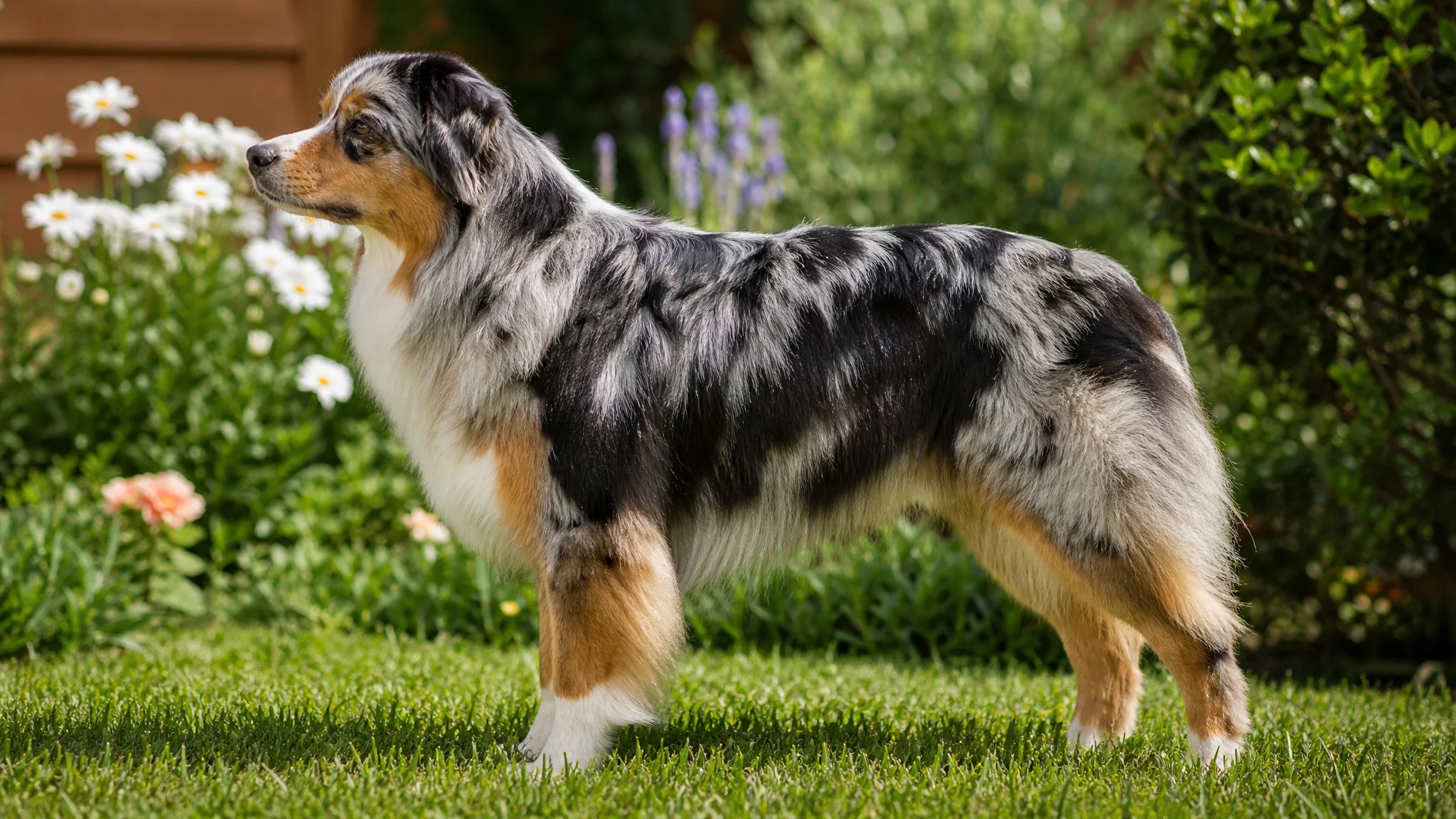
General nutrition information compiled from product labels and published sources, not veterinary advice. Your veterinarian is the right person to choose a diet for your dog, especially one with a health condition.
Every dog eats a little differently, and an Australian Shepherd is no exception. Appetite shifts with age, activity and the food in the bowl. This guide shows you how to observe australian shepherd eating habits, record them, and use the food label to make sensible choices.
It is a method, not a diet plan. We compared label data from brand pages. We did not run feeding trials or taste tests, and we cannot tell you how your dog will respond to a food. Your veterinarian decides what is right for an individual dog.
What you need
- The bag, can or tub your dog eats now, with the full label visible.
- A measuring cup, or better, a kitchen scale. Royal Canin's page says grams are the most accurate form of measurement and cups are only close estimates.
- A notebook or phone note for a simple feeding log.
- Your dog's current weight, from a home scale or a visit to the clinic.
- Your veterinarian's contact details, for questions you cannot settle from a label.
For a broader look at what shapes a good diet for the breed, see Australian Shepherd nutrition and the diet factors that matter.
Step-by-step: how to learn your dog's eating habits
Step 1: Identify your dog's life stage
Appetite and calorie needs change as dogs grow and age. The Royal Canin US breed library for the Australian Shepherd lists these stages: puppy from birth to 12 months, adult from 1 to 7 years, mature from 7 to 10 years, and senior from 10 years. That is a manufacturer's guide, not a veterinary or breed club rule, so treat the ages as rough markers.
Write down which stage your dog is in. A puppy and a seven-year-old may need very different foods, even if both seem equally eager at mealtime.
Step 2: Note your dog's size
Wikipedia gives the adult Australian Shepherd weight as 35 to 70 lb (16 to 32 kg). The Royal Canin breed page profile puts males at about 50 to 65 lb and females at about 40 to 55 lb. That is a wide spread, so your own dog's weight matters more than the breed average.
This matters because some foods are sized by weight. Royal Canin's Medium formulas, for example, are written for adult weights of 23 to 55 lb. A large male can sit above that range. Hill's large breed adult recipes are written for ideal weights of 55 to 110 lb. Neither category is a perfect match for every Aussie, so read the weight range on the product page.
Step 3: Read the label's adequacy statement
Look for the AAFCO statement. It tells you which life stage the food is formulated for. Royal Canin Medium Adult, for example, says it is formulated to meet the AAFCO Dog Food Nutrient Profiles for maintenance. Royal Canin Medium Puppy refers to growth.
Watch for the large-size wording. Victor's Hi-Pro Plus label says all life stages "except for growth of large size dogs (70 lb. or more as an adult)." Nom Nom and JustFoodForDogs say "including growth of large size dogs." Cornell's Riney Canine Health Center advises a commercial large-breed puppy diet with an AAFCO growth adequacy statement and no extra calcium. Most Aussies finish under 70 lb, but ask your veterinarian which wording fits your puppy.
Step 4: Find the calories and the feeding guide
A cup is not a standard unit of nutrition. The same cup holds very different calories from one food to the next. These figures come from each brand's own product page:
| Food | Form | Calories as listed |
|---|---|---|
| Royal Canin Medium Adult | Dry | 340 kcal ME per cup |
| Hill's Science Diet Adult Large Breed Chicken & Barley | Dry | 365 kcal per cup |
| Victor Chicken Meal & Brown Rice | Dry | 372 kcal per cup |
| Victor Hi-Pro Plus | Dry | 406 kcal per cup |
| Freshpet Home Cooked Chicken | Fresh | 189 kcal per cup |
Swapping foods cup for cup could change how much your dog eats by a large margin. Use the feeding chart on the new product's page, not the old one.
Step 5: Treat the feeding chart as a starting point
Every chart is a guide. Royal Canin says so directly, and Hill's tells owners to adjust amounts as necessary to maintain optimal weight and to ask a veterinarian if unsure. Pick the amount for your dog's weight, then measure it the same way each time, ideally in grams.
Count treats and training rewards as part of the day's food. If you use many, your veterinarian can help you trim the meals to match.
Step 6: Set a routine and keep a log for two weeks
Feed at consistent times and in a calm spot. Freshpet's page says its recipe can be fed as one meal daily or split into two, so brands often leave this choice to you and your vet.
For two weeks, note:
- What and how much was offered, and how much was eaten.
- How quickly your dog ate.
- Energy level and exercise that day.
- Stool quality and any vomiting.
- Treats given.
Patterns show up on paper that are easy to miss day to day. You may find your dog eats more after hard exercise, or leaves food on hot days.
Step 7: Check body condition and adjust slowly
Weight on a scale is only part of the picture. Feel along your dog's ribs and look at the waist from above. Your veterinarian can show you how to score body condition so you know what a healthy shape looks like on a thick-coated breed, where the coat can hide changes.
If your dog seems to be gaining or losing, change the amount in small steps and recheck in a couple of weeks. Do not make big cuts without veterinary advice. If you switch foods, ask your veterinarian how to mix the old and new food over several days.
Tips
- Compare foods on the same basis. Royal Canin and Victor list guaranteed analyses. Hill's pages list typical dry matter values instead, so the numbers are not directly comparable.
- Look past the front of the bag. The first five ingredients, the AAFCO statement and the calories tell you more than the marketing.
- Keep the same measuring tool. A scoop that changes size quietly changes the diet.
- Mention medication sensitivity. The OFA notes that MDR1 drug sensitivity affects some herding breeds, including Australian Shepherds. It is not a diet issue, but it affects deworming and other medications, so tell your veterinarian and ask about testing.
Common mistakes to avoid
- Feeding by cup alone. As the table shows, cups vary widely in calories.
- Choosing a food by size category without checking weight. A "medium" formula may not fit a 65 lb male.
- Adding calcium to a puppy diet. Cornell advises no extra calcium for large-breed puppies on a complete growth diet.
- Forgetting treats. They add up.
- Reading the label as medical advice. A label describes what is in the food. It does not tell you what your dog needs for a health condition.
- Chasing grain-free or other trends out of worry. The FDA's DCM investigation page was last updated December 23, 2022, and the agency says it will not post further updates until there is meaningful new scientific information. It also does not treat report numbers as proof of cause. If you are unsure, ask your veterinarian rather than guessing from headlines.
- Using prescription diets without a prescription. Those are only for a veterinarian to prescribe.
What to expect
With a consistent routine and a written log, many owners find it easier to spot changes early and to talk with their veterinarian using real notes. A food matched to your dog's life stage and size, fed to a measured guide, may help support steady weight and regular meals. Results vary from dog to dog, and no food can promise a particular outcome.
Call your veterinarian if your dog stops eating, vomits repeatedly, loses weight without a reason, or shows a sudden change in appetite. Do not wait for the two-week log to finish.
Sources
- Royal Canin US breed library, Australian Shepherd
- Wikipedia, Australian Shepherd
- Cornell University Riney Canine Health Center, Panosteitis in dogs
- OFA, Multiple Drug Sensitivity
- FDA CVM, Investigation into Potential Link between Certain Diets and Canine DCM
- Royal Canin, Medium Adult Dry Dog Food
- Hill's Science Diet, Adult Large Breed
- Victor, Hi-Pro Plus
- Victor, Chicken Meal & Brown Rice Formula
- Freshpet, Home Cooked Chicken Recipe