How to Tell if an Australian Shepherd Needs a Diet Food
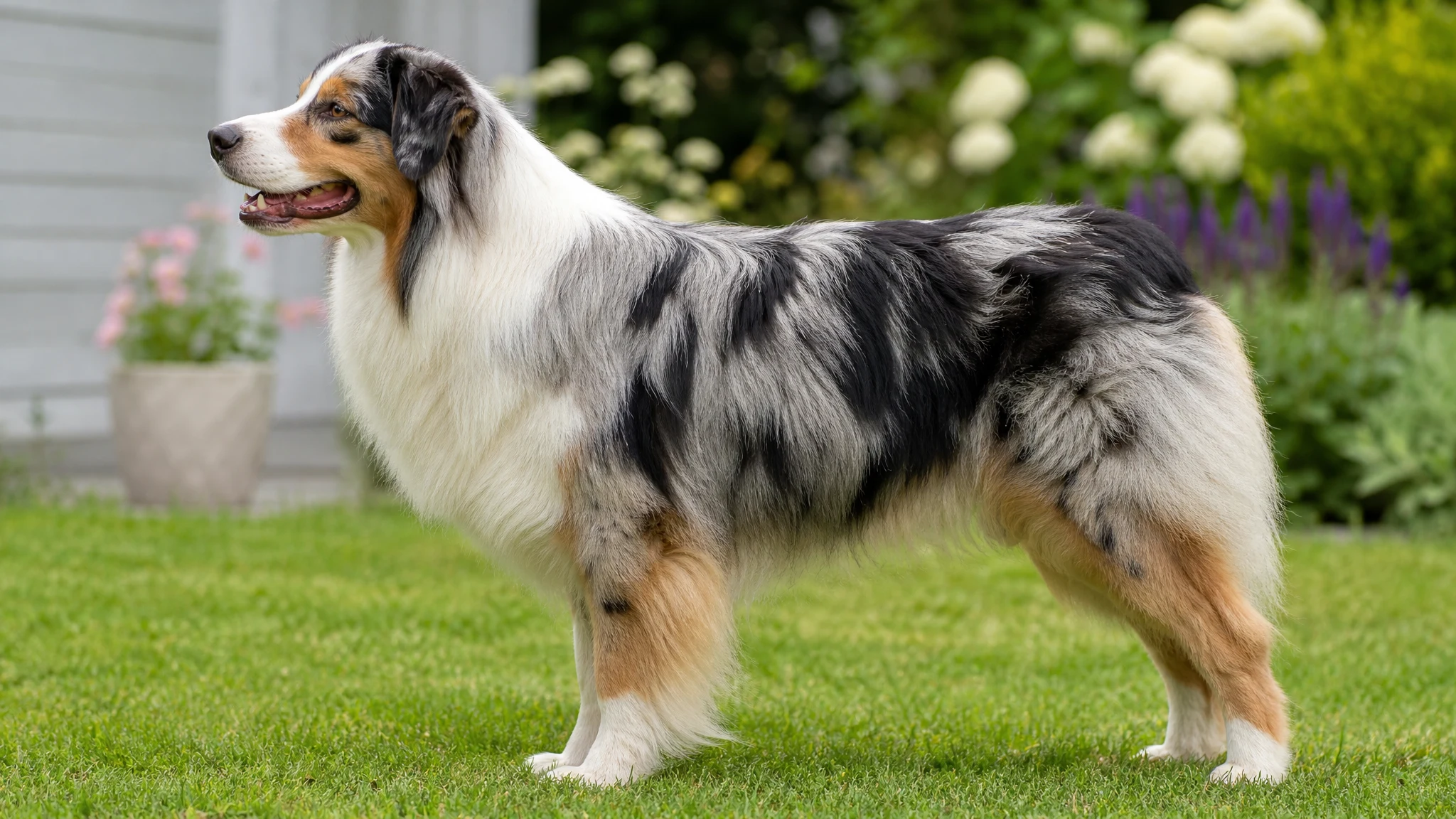
General nutrition information compiled from product labels and published sources, not veterinary advice. Your veterinarian is the right person to choose a diet for your dog, especially one with a health condition.
Many owners of an Australian Shepherd ask the same question. Is my dog carrying extra weight, and would a diet food help? The honest answer starts with your dog, not a bag. This guide walks through a home check, a few numbers to gather, and a careful way to read labels before you talk to your veterinarian.
One caution first. A "diet" food is not a treatment for any condition, and a veterinarian decides what an individual dog needs. Prescription diets are only something a veterinarian prescribes. The goal here is to help you notice a possible weight problem and ask better questions.
Materials You Need
- A bathroom scale, or your vet's scale for a more accurate number
- A notebook or phone note for dates and weights
- The current food bag or can, including the feeding guide and calorie statement
- A measuring cup, or a kitchen scale for weighing portions
- A list of every treat, chew and table scrap your dog gets in a typical week
- Your veterinarian's contact information
Know the Breed Range First
Wikipedia lists the adult Australian Shepherd at 35 to 70 lb (16 to 32 kg). The Royal Canin breed library gives a more specific profile, with males at about 50 to 65 lb and females at about 40 to 55 lb. That is a wide spread, so a weight on the scale does not tell you much on its own. A lean 45 lb female and a lean 65 lb male can both be healthy.
I could not confirm from an opened veterinary or breed club source that Aussies are especially prone to obesity. So do not assume your dog is at risk, and do not assume your dog is safe. Check the dog in front of you.
Step-by-Step: Checking Whether Your Aussie Needs Diet Food
Step 1: Look at the dog from above and from the side
Stand over your dog while they stand still. Look for a visible waist behind the ribs. Then look from the side for a belly line that tucks up toward the back legs. The Aussie coat can hide a lot, so do not rely on looks alone.
Step 2: Feel the ribs and the base of the tail
Run your hands along the ribcage with light pressure. In general, you should be able to feel the ribs without digging. If you have to press hard to find them, extra padding may be hiding them. Because the double coat is thick, hands work better than eyes for this dog.
Step 3: Weigh your dog and record it
Weigh yourself holding the dog, then weigh yourself alone, and subtract. Write down the date and number. One reading means little. A trend over several weeks tells you much more. Compare the number to the breed ranges above, but treat those as rough guides only.
Step 4: Add up what your dog really eats
Write down the food, the measured amount, and every treat for a normal week. Training treats count, especially for a working-minded breed that gets rewarded often. Many owners are surprised by this total.
Step 5: Read the calorie statement on the current food
Find the calories per cup (or per can) on the label. Foods vary a lot. The brand pages list these figures:
| Food (brand page figures) | Calories |
|---|---|
| Freshpet Fresh From the Kitchen Home Cooked Chicken Recipe | 189 kcal per cup (calculated) |
| Royal Canin Medium Digestive Care (dry) | 321 kcal ME per cup |
| Royal Canin Medium Adult (dry) | 340 kcal ME per cup |
| Hill's Science Diet Adult 6+ Large Breed Chicken Meal, Barley & Rice (dry) | 352 kcal per cup |
| Victor Hi-Pro Plus (dry) | 406 kcal per cup |
| Royal Canin Weight Care Loaf in Sauce (13.5 oz can) | 263 kcal ME per can |
Notice that a cup of one food can carry far more energy than a cup of another. Victor describes Hi-Pro Plus as a high-protein formula for active dogs, so a dog with a gentle routine may not need it. A swap to a lower-calorie food can change intake even when the cup looks the same.
Step 6: Compare to the feeding guide, then to your dog
Feeding guides are starting points. Royal Canin states its guide is "only a guide" and Hill's says to adjust amounts as necessary to maintain optimal weight. If you are unsure, Hill's says to ask your veterinarian. Your dog's activity, age and body shape matter more than the chart.
Step 7: Book a vet visit and bring your notes
Bring the weight log, the food label and your treat list. Ask your veterinarian to score your dog's body condition, rule out health reasons for weight change, and suggest a calorie target. Aussies can carry the MDR1 drug sensitivity gene, according to the OFA, so mention any medications or dewormers you use. This is not a diet issue, but it is a good reason to keep your vet involved in any health plan.
How to Compare Foods Once Your Vet Agrees
If your veterinarian suggests a lower-calorie food, the comparison below is the method I used. I compared label data from each brand's own page. I did not run feeding trials or taste tests, and I am not reporting how any food performed in a dog.
- The AAFCO statement. Look for wording that says the food is complete and balanced for your dog's life stage, such as "for maintenance" for adults.
- Calories per cup or can. This is the number that matters most for weight, as the table above shows.
- Guaranteed analysis. Royal Canin lists its Weight Care loaf at 7.5% minimum protein, 1.1% minimum fat and 2.1% maximum fiber. Wet foods are mostly water, so you cannot compare those percentages directly to dry food.
- Ingredients. The first few ingredients show the main components. They do not show quality on their own.
A note on Hill's pages: they list typical nutrient values on a dry matter basis, not guaranteed minimums or maximums, so do not line those up against the guaranteed analyses of other brands.
I also did not find a breed-specific Australian Shepherd dry formula sold in the US. Royal Canin's Medium formulas are sized for adults of 23 to 55 lb. A large male Aussie can sit above that range, so check with the brand and your vet about fit.
For a wider look at the factors behind a good feeding plan, see Australian Shepherd nutrition and the diet factors that matter.
Tips for Doing This Well
- Weigh at the same time of day, every two weeks or so, so the trend is easy to see.
- Measure meals with a cup or a scale every time. Scooping by eye drifts upward.
- Count treats as part of the daily food, and ask your vet how much room they should take.
- Change foods slowly, mixing the new food in over several days, unless your vet gives other directions.
- Keep up exercise, but let your vet advise on a plan if your dog is overweight or has joint concerns.
Common Mistakes to Avoid
- Trusting the scale alone. The breed range is wide, and a healthy weight depends on the individual dog.
- Cutting food sharply on your own. Large cuts can leave a dog short on nutrients. Let your vet set the target.
- Assuming "light" or "diet" on a bag means the same thing everywhere. Compare the actual calories per cup.
- Switching puppies to a diet food. Royal Canin lists puppy as birth to 12 months for this breed. Cornell's Riney Canine Health Center advises a growth-appropriate food for large-breed puppies, with no extra calcium. Ask your vet before changing a growing dog's diet.
- Ignoring the treat list. It is often the easiest place to find extra calories.
- Expecting a food to fix a health problem. No food treats or cures disease. The vet decides.
What Results to Expect
If extra weight is the issue, a measured portion plan and fewer extra calories may help a dog move gradually toward a healthier body condition over weeks to months. Results vary by dog, and nothing here is guaranteed. Your vet can set a realistic pace and tell you when to recheck.
You may also notice the waist becoming easier to see and the ribs easier to feel. Those are signs to share with your vet, not proof that a food worked. Dogs with joint, thyroid or other health issues need a veterinarian's plan. Hip dysplasia was reported at a relatively low rate of about 6% in Aussies according to Wikipedia, and diet alone is not a way to prevent or treat it.
On heart health, the FDA's last update on its investigation into diets and canine dilated cardiomyopathy is dated December 23, 2022. The FDA says it will not issue further public updates until there is meaningful new scientific information, and it does not treat report numbers as proof of cause. If you have questions about your dog's heart or diet type, ask your veterinarian.
Finally, for exact label figures, always check the bag or the brand's own page, because formulas can change.
Sources
- Wikipedia, Australian Shepherd
- Royal Canin US breed library, Australian Shepherd
- Royal Canin Medium Adult Dry Dog Food
- Royal Canin Medium Digestive Care
- Royal Canin Weight Care Loaf in Sauce
- Hill's Science Diet Adult 6+ Large Breed
- Victor Hi-Pro Plus
- Freshpet Fresh From the Kitchen Home Cooked Chicken Recipe
- OFA, Multiple Drug Sensitivity
- Cornell Riney Canine Health Center, Panosteitis in dogs
- FDA CVM, Investigation into Potential Link between Certain Diets and Canine DCM