Building a Balanced Diet for an Australian Shepherd Puppy
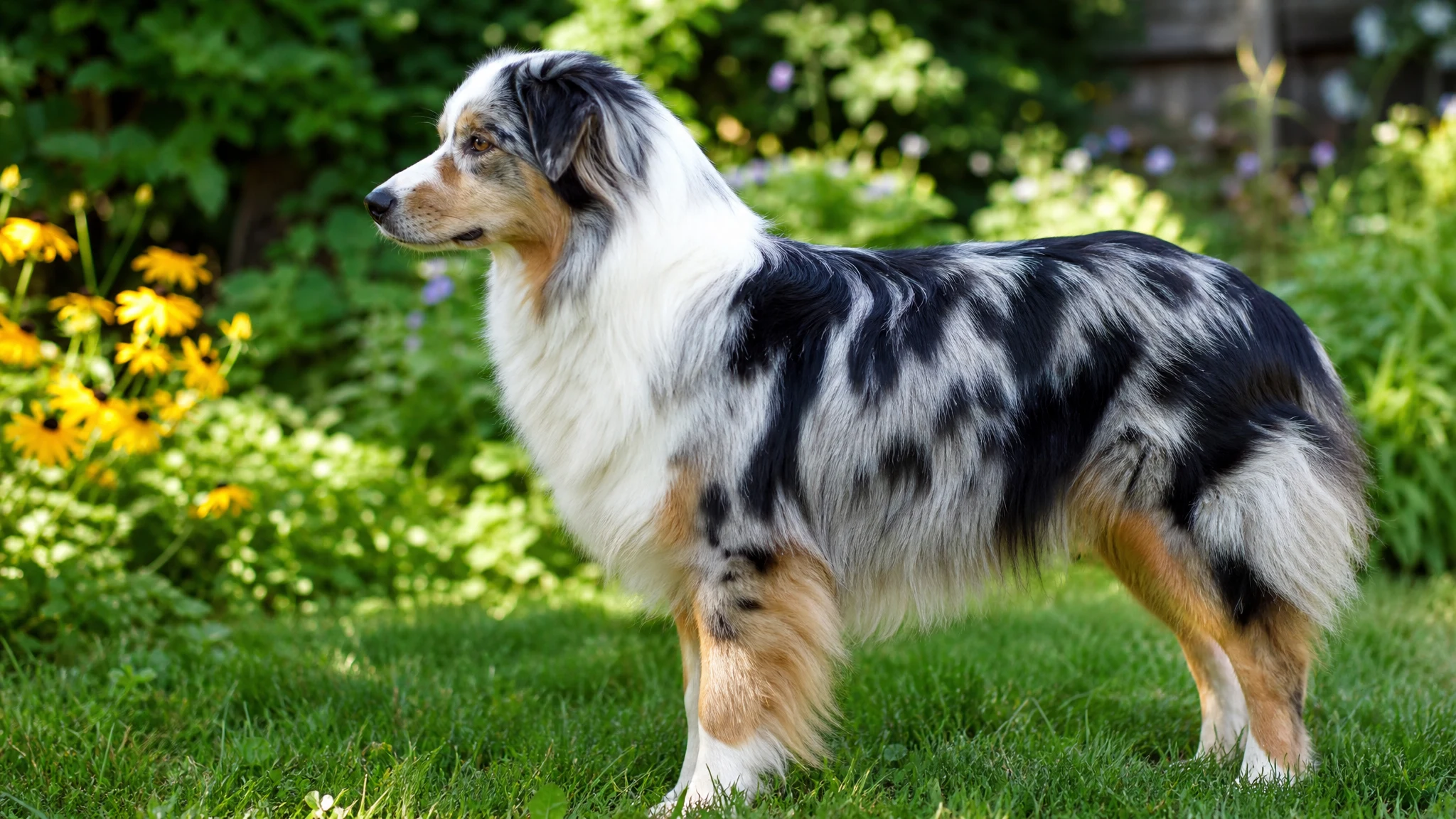
General nutrition information compiled from product labels and published sources, not veterinary advice. Your veterinarian is the right person to choose a diet for your dog, especially one with a health condition.
A good Australian Shepherd puppy diet starts with one decision: a complete and balanced food made for growth. Everything else, from portions to treats, builds on that choice.
This guide walks through the steps. It compares label data from brand pages. We did not run feeding trials or taste tests, and we have not fed any of these foods ourselves. Your veterinarian decides what is right for your individual puppy.
What You Need Before You Start
- A puppy food (or all-life-stages food) with an AAFCO nutritional adequacy statement for growth.
- A kitchen scale. Royal Canin notes on its feeding guide that grams are the most accurate way to measure, and that cup amounts are approximate.
- A measuring cup, for day-to-day use once you know your gram amount.
- A notebook or phone note to log your puppy's weight and meals.
- Your veterinarian's contact details, since they set the final plan.
Step 1: Know the Size You Are Feeding For
Wikipedia lists the adult Australian Shepherd at 35 to 70 lb (16 to 32 kg). Royal Canin's breed library describes males at about 50 to 65 lb and females at about 40 to 55 lb.
That puts most Aussies in the medium range, though no source we found states a size category outright. A big male can end up above the 55 lb ceiling of some medium-breed formulas, so keep adult size in mind when you read labels.
Royal Canin's breed library also gives life stages for the breed: puppy from birth to 12 months, adult from 1 to 7 years. Treat these as a manufacturer's guide, not a veterinary rule. Ask your veterinarian when to switch your own puppy.
Step 2: Look for the Growth Statement on the Label
Find the AAFCO statement, usually near the guaranteed analysis. For a puppy you want wording that says the food meets the AAFCO Dog Food Nutrient Profiles for growth or for all life stages. An adult maintenance statement is not enough for a growing puppy.
Watch the large-size wording too. Some labels say "including growth of large size dogs (70 lb. or more as an adult)." Others say "except for growth of large size dogs." Victor's Hi-Pro Plus page, for example, uses the "except" wording. Victor's Chicken Meal & Brown Rice Formula is listed as all life stages, so read its full statement on the page.
Cornell University's Riney Canine Health Center advises a commercial large-breed puppy diet with an AAFCO growth adequacy statement and no extra calcium. Most Aussies finish under 70 lb, so a general growth or all-life-stages food is the usual match. The large-size wording matters most for a puppy likely to land at the top of the range.
Step 3: Compare Label Data, Not Marketing
Set two or three candidates side by side. Compare the AAFCO statement, the first five ingredients, the guaranteed analysis and the calories per cup. Here is what the brands' own pages show for foods that could suit a puppy.
| Food | Label statement | Protein / fat (min) | Calories |
|---|---|---|---|
| Royal Canin Medium Puppy (dry) | Growth profile, for puppies up to 12 months, adult weight 23 to 55 lb | 30% / 18.4% | 410 kcal ME per cup |
| Victor Chicken Meal & Brown Rice (dry) | All life stages | 24% / 12% | 372 kcal per cup |
| Victor Hi-Pro Plus (dry) | All life stages, except growth of large size dogs | 30% / 20% | 406 kcal per cup |
| Nom Nom Chicken Cuisine (fresh) | All life stages, including growth of large size dogs | 6.5% / 4.5% | 244 kcal per cup |
| JustFoodForDogs Pantry Fresh Chicken & White Rice (pouch) | All life stages, including growth of large size dogs | 6.5% / 2.5% | 31 kcal ME per oz |
Do not compare the dry and fresh protein numbers directly. Fresh foods contain far more water, so their as-fed percentages look low. Compare foods of the same type, or ask the brand for dry-matter values.
For Royal Canin Medium Puppy, the page we read shows a growth statement. We could not confirm from that page whether it also covers large-size dogs, so check the bag if your puppy may grow big.
Step 4: Read the Ingredient List Calmly
Ingredients are listed by weight, so the first few tell you the most. Royal Canin Medium Puppy lists chicken by-product meal, chicken fat, brewers rice, corn and wheat first. Victor Chicken Meal & Brown Rice lists chicken meal, grain sorghum, peas, whole grain millet and brown rice.
Neither list is a warning sign on its own. Words like "by-product meal" or "grain" describe ingredients, not quality. Be wary of any front-of-bag claim that sounds like a health promise. The label's nutrient statement matters more than the slogan.
On grain-free and legume-heavy diets, the FDA's page on its canine dilated cardiomyopathy (DCM) investigation was last updated December 23, 2022. FDA says it will not issue more public updates until there is meaningful new scientific information, and it does not treat report numbers as proof of cause. If you are unsure, ask your veterinarian.
Step 5: Set a Starting Portion From the Label
Use the brand's feeding guide as a starting point only. Royal Canin Medium Puppy lists amounts by age in months and expected adult weight, and offers a feeding calculator. Fresh brands such as Freshpet and Nom Nom ask you to select your dog's weight in their guides.
- Find your puppy's current age and weight, plus your best estimate of adult weight.
- Read the daily amount on the brand's own guide and weigh it in grams if possible.
- Divide it into the number of meals your veterinarian suggests.
- Count treats and training rewards as part of the day's food.
Step 6: Track Growth and Adjust With Your Veterinarian
Weigh your puppy on a regular schedule and write it down. Hill's feeding guidance says to adjust amounts as needed to maintain optimal weight, and to ask your veterinarian if unsure. The same idea applies to puppies: the bag guide is a start, and your puppy's body condition tells you more.
Bring your log to each checkup. Your veterinarian can tell you whether the pace of growth looks right and when to move to an adult food.
Step 7: Tell Your Veterinarian About Breed-Specific Issues
The OFA describes multiple drug sensitivity (MDR1) as a concern in some herding breeds, including Australian Shepherds. It is not a diet issue, but it affects medications and some dewormers. Raise it early.
For a wider look at what shapes an Aussie's feeding plan, see our overview of Australian Shepherd nutrition and the diet factors that matter.
Tips and Common Mistakes
- Adding calcium. Cornell advises no extra calcium for growing puppies on a complete growth diet. Do not add supplements unless your veterinarian says so.
- Switching foods suddenly. Change over gradually, as your veterinarian or the brand suggests, to see how your puppy's stool responds.
- Feeding an adult maintenance food to a puppy. Check for the growth or all-life-stages statement.
- Ignoring treats. Active, food-motivated Aussie puppies in training can collect a lot of extra calories.
- Choosing by size name alone. "Medium" formulas are built around a stated adult weight, so match it to your puppy's likely size.
- Trusting one number. Calories, ingredients, statement and portion guide all count together.
- Using prescription diets on your own. Those are something only a veterinarian prescribes.
What to Expect
A complete and balanced growth food, measured carefully and adjusted with your veterinarian, may support steady growth and a healthy body condition. Many owners see firm, consistent stools and steady energy within a few weeks, though every puppy differs. No food can prevent or treat a health condition, and results are not guaranteed.
If you see ongoing vomiting, loose stools, itching or poor weight gain, contact your veterinarian rather than changing foods repeatedly.
Sources
- Royal Canin US breed library, Australian Shepherd
- Royal Canin, Medium Puppy Dry Dog Food
- Victor, Hi-Pro Plus
- Victor, Chicken Meal & Brown Rice Formula
- Nom Nom, Chicken Cuisine
- JustFoodForDogs, Pantry Fresh Chicken & White Rice
- Hill's Science Diet, Adult Large Breed
- Cornell Riney Canine Health Center, Panosteitis in dogs
- FDA CVM, Investigation into Potential Link between Certain Diets and Canine DCM
- OFA, Multiple Drug Sensitivity
- Wikipedia, Australian Shepherd