Best Dog Food for Australian Shepherds With Skin Allergies
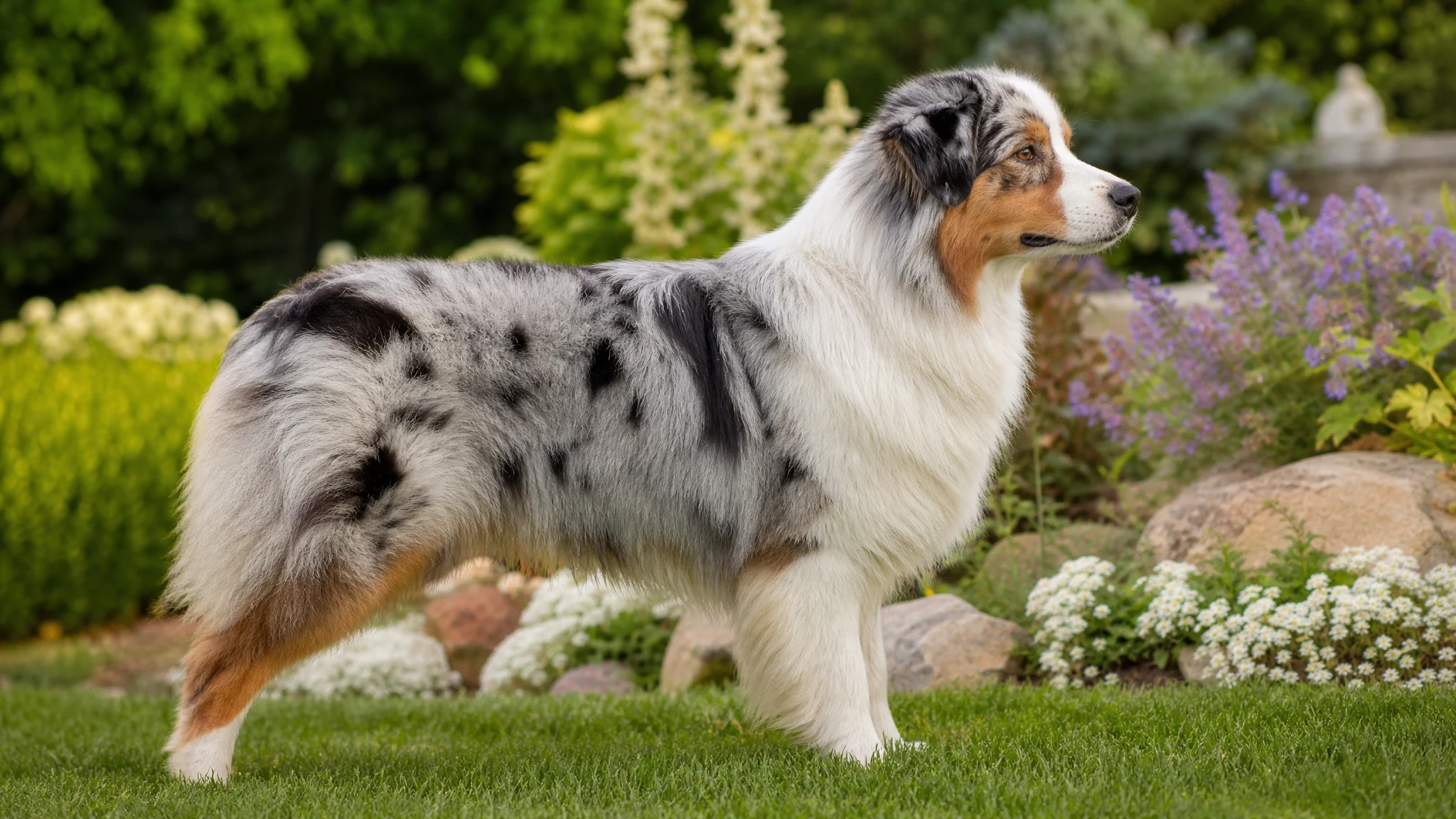
General nutrition information compiled from product labels and published sources, not veterinary advice. Your veterinarian is the right person to choose a diet for your dog, especially one with a health condition.
Itchy skin in an Aussie is frustrating, and food gets blamed quickly. Sometimes food is involved. Often it is not. No bag can promise to fix skin trouble, so the useful skill is a careful way to read labels and work with your veterinarian.
This guide walks through that process for australian shepherd skin allergies. It does not crown one winner. We compared label data from brand pages. We did not run feeding trials or taste tests, and we have not fed any of these foods to dogs.
What You Need Before You Start
- A notebook or phone note for a food and symptom diary.
- Your dog's current food bag, or its full ingredient list.
- A list of every treat, chew, flavored medication and table scrap your dog gets.
- Your dog's current weight, ideally from a recent vet visit.
- An appointment with your veterinarian. Skin problems have many causes, and only a veterinarian can sort them out.
Step 1: See Your Veterinarian First
Itching can come from fleas, environmental triggers, infection, or food. These look alike at home. A veterinarian can rule causes in or out and decide whether a food trial makes sense for your individual dog.
Any special diet that treats a diagnosed condition is something a veterinarian prescribes. Do not try to pick one from a store shelf on your own.
One Aussie-specific point is worth raising at the same visit. The Orthopedic Foundation for Animals (OFA) lists multiple drug sensitivity (MDR1) as a concern in herding breeds. It affects how some medications are used. If your vet suggests itch or parasite medication, mention the breed. Ask whether MDR1 testing applies to your dog.
We did not find a breed club or veterinary source we could open that states how common food allergy is in Australian Shepherds. Ask your veterinarian or a breed club instead of trusting a number you see online.
Step 2: Keep a Food and Symptom Diary
Write down what your dog eats, including treats, and when itching, paw licking or ear scratching flares. Do this for two to four weeks before changing anything. A diary gives your veterinarian real information instead of guesses.
Step 3: Read the Label in Four Places
- The AAFCO statement. It says whether the food is complete and balanced and for which life stage. For example, Royal Canin's Medium Adult page says the food is formulated to meet AAFCO Dog Food Nutrient Profiles for maintenance.
- The first five ingredients. These make up much of the recipe by weight. Note every protein source, including meals, by-products and fats.
- The guaranteed analysis. This gives minimum protein and fat and maximum fiber. Some brands, such as Hill's, show typical values on a dry matter basis instead. Those are not the same thing and should not be compared directly.
- Calories per cup. You need this to portion the food correctly.
Step 4: Match the Food to Your Dog's Size and Age
Australian Shepherds are listed at about 35 to 70 pounds as adults, according to Wikipedia. The Royal Canin breed library gives about 50 to 65 pounds for males and 40 to 55 for females. Royal Canin's life stages for the breed are puppy to 12 months, adult from 1 to 7 years, mature from 7 to 10 years, and senior from 10 years.
Royal Canin's Medium formulas are written for dogs with adult weights of 23 to 55 pounds. A large male Aussie can sit above that range. Hill's large breed adult recipes are written for dogs of 55 to 110 pounds. Neither range matches every Aussie, so check the weight range on each page against your own dog.
For puppies, the Cornell University Riney Canine Health Center advises a commercial large-breed puppy diet with an AAFCO growth adequacy statement and no added calcium. Most Aussies finish under 70 pounds, so a food with a general growth or all-life-stages statement is the usual fit. Victor Hi-Pro Plus carries the wording "except for growth of large size dogs (70 lb. or more as an adult)." Nom Nom and JustFoodForDogs use "including growth of large size dogs." Ask your vet which wording suits your puppy.
Step 5: Compare Label Data Side by Side
The table below uses data from each brand's own product page. Protein and fat for Royal Canin and Victor are label minimums. Hill's figures are typical dry matter values, not guarantees. This is a comparison tool, not a ranking and not a recommendation.
| Food | First five ingredients | Protein / fat | Calories |
|---|---|---|---|
| Royal Canin Medium Adult (dry) | Brewers rice, chicken by-product meal, oat groats, wheat, corn protein meal | 23% min / 12% min | 340 kcal per cup |
| Victor Chicken Meal & Brown Rice (dry) | Chicken meal, grain sorghum, peas, whole grain millet, whole grain brown rice | 24% min / 12% min | 372 kcal per cup |
| Hill's Science Diet Adult Large Breed No Corn, Wheat, Soy (dry) | Chicken, brown rice, brewers rice, cracked pearled barley, chicken meal | 23.8% / 16.3% (typical, dry matter) | 390 kcal per cup |
| Freshpet Home Cooked Chicken (fresh) | Chicken, eggs, cranberries, carrots, ground oats | 15% min / 11% min | 189 kcal per cup |
| Nom Nom Chicken Cuisine (fresh) | Chicken, sweet potatoes, squash, spinach, dicalcium phosphate | 6.5% min / 4.5% min | 244 kcal per cup |
Notice that chicken in some form leads every recipe above. If your veterinarian identifies a specific protein as a problem, a label scan is the first job. Look at meals, fats and by-products too, not only the first word of the ingredient list. Freshpet says to check the bag for its protein figure, since other sources may differ.
Dry and fresh foods also differ in water content, so their protein percentages are not directly comparable. A fresh food showing 6.5% protein is not weaker than a kibble showing 23%.
The brand pages we reviewed do not state kibble size, so check the bag if that matters for your dog.
Step 6: Switch Foods Slowly, Only If Your Vet Agrees
If your veterinarian suggests a different food, mix it in gradually over about a week. Increase the new food a little each day. Keep treats and chews consistent, because a single new treat can muddy the picture.
If your vet recommends a strict elimination trial, follow their plan exactly. That includes flavored medications and chews.
Step 7: Portion From the Label, Then Adjust
Feeding charts are starting points. Royal Canin notes that its chart is only a guide. Hill's says to adjust amounts to maintain optimal weight and to ask your veterinarian if unsure. Weigh your dog and check body condition every few weeks. Your vet can tell you when to change the amount.
Tips and Common Mistakes
- Changing several things at once. New food, new treats and a new shampoo together make it impossible to tell what helped or hurt.
- Judging by marketing words. Terms like "natural" or "limited" are not a diagnosis or a guarantee. Read the actual ingredients.
- Assuming grain is the problem. All five foods in the table are listed as not grain-free or unknown, and none of the pages we opened say grain is the cause of itching. Ask your vet before dropping grains.
- Chasing grain-free by default. The FDA has investigated a possible link between certain diets and canine dilated cardiomyopathy (DCM). Its latest update is dated December 23, 2022. FDA says it will not post more updates until there is meaningful new scientific information, and it does not treat report numbers as proof of cause. Talk to your vet before choosing a diet on this basis.
- Skipping the diary. Without notes, a two-month trial often ends with no clear answer.
- Adding supplements on your own. Ask your veterinarian first, including about amounts.
- Stopping a trial early. Skin can take weeks to show any change, and a vet decides how long a trial should run.
What Results to Expect
If food is part of your dog's skin trouble, a vet-guided diet change may help reduce itching over several weeks. It is not certain. Food may not be the cause at all, and no food has been shown here to prevent, treat or cure a skin condition.
If you see no change after a fair trial, that is useful information. Take your diary back to your veterinarian and look at other causes together.
For more on the wider picture, see our guide to Australian Shepherd nutrition and the diet factors that matter.
Sources
- Wikipedia, Australian Shepherd
- Royal Canin US breed library, Australian Shepherd
- Orthopedic Foundation for Animals, Multiple Drug Sensitivity
- Cornell University Riney Canine Health Center, Panosteitis in dogs
- FDA, Investigation into Potential Link between Certain Diets and Canine DCM
- Royal Canin Medium Adult Dry Dog Food
- Hill's Science Diet Adult Large Breed No Corn, Wheat, Soy
- Victor Chicken Meal & Brown Rice Formula
- Victor Hi-Pro Plus
- Freshpet Fresh From the Kitchen Home Cooked Chicken Recipe
- Nom Nom Chicken Cuisine