Transitioning an Australian Shepherd to Wet Food for Digestive Issues
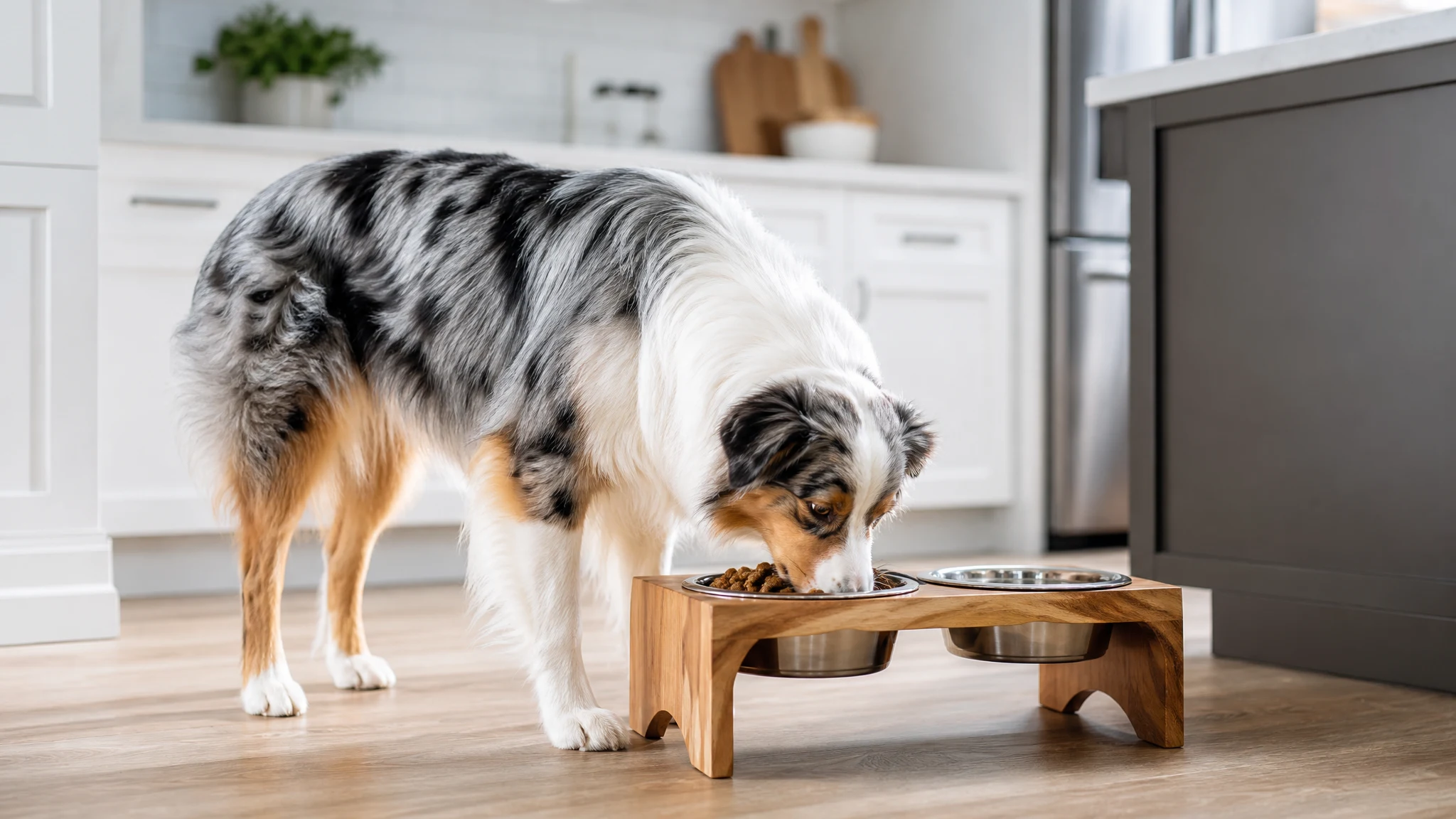
General nutrition information compiled from product labels and published sources, not veterinary advice. Your veterinarian is the right person to choose a diet for your dog, especially one with a health condition.
An Australian Shepherd with a touchy stomach can make every food change feel risky. Loose stools, gas or a skipped meal after a new bowl is a common worry. A slow, steady switch gives you the best chance of a calm transition.
This guide walks through the switch step by step. It also explains how to read labels when you look for the best wet dog food for sensitive stomach concerns, without trusting front-of-can marketing.
One honest note on method: we compared label data from brand product pages. We did not run feeding trials or taste tests, so nothing here is a ranking of how dogs respond.
Before you start: talk to your veterinarian
Digestive trouble has many causes, and food is only one. Parasites, infections, stress and other illnesses can all upset a stomach. If your dog has vomiting, ongoing diarrhea, blood in the stool, weight loss or low energy, call your veterinarian before changing the diet.
Confirm amounts with your vet if your dog has any health condition. A veterinarian decides what is right for an individual dog. Prescription diets are something only a veterinarian prescribes.
One breed note: the OFA lists multiple drug sensitivity (MDR1) as a concern in herding breeds, and it affects deworming and other medications. It is not a diet issue. Still, mention your Aussie's breed and any test results when you discuss a stomach problem with your vet.
What you need
- Your dog's current food, enough for 10 to 14 days.
- The new wet food. Buy a small amount first, not a case.
- A kitchen scale. Royal Canin notes that grams are the most accurate way to measure, and cups are only close estimates.
- A measuring cup and a clean spoon.
- A notebook or phone note to log meals, stool quality and appetite.
- The brand's feeding guide for your dog's weight and activity level.
- Airtight storage for opened cans or fresh packs, kept as the label directs.
How to read wet food labels for a sensitive stomach
No label can promise a calm stomach. What you can do is check a few facts that apply to any dog.
- The AAFCO statement. Look for wording that the food meets the AAFCO Dog Food Nutrient Profiles for maintenance, growth or all life stages. This tells you the food is complete and balanced.
- The ingredient list. Note the first five ingredients. Pick a food whose main proteins your dog has already eaten without trouble.
- Calories. Wet food has a lot of water, so compare calories, not weight of food.
- The life stage. Royal Canin's Australian Shepherd breed page lists puppy as birth to 12 months, adult as 1 to 7 years, mature as 7 to 10 years and senior from 10 years. That is a manufacturer's view, not a veterinary standard.
What the label data shows for a few wet and fresh options
Here is label data from the brands' own pages. Hill's, Victor and most Royal Canin formulas on these pages are dry, so only wet and fresh foods are listed.
| Food | Form | Protein / fat | Calories |
|---|---|---|---|
| Royal Canin Weight Care Loaf in Sauce | Canned, 13.5 oz | 7.5% min / 1.1% min | 263 kcal ME per can |
| Nom Nom Chicken Cuisine | Fresh, gently cooked | 6.5% / 4.5% as listed | 244 kcal per cup |
| JustFoodForDogs Pantry Fresh Chicken & White Rice | Shelf-stable pouch | 6.5% / 2.5% as listed | 387.5 kcal ME per 12.5 oz pack |
| Freshpet Home Cooked Chicken Recipe | Fresh, refrigerated | 15% / 11% as listed | 189 kcal per cup |
A few cautions. The Royal Canin loaf is made for dogs that tend to gain weight, not specifically for sensitive stomachs. Its first ingredients are water, pork by-products, pork liver, chicken liver and chicken. Royal Canin's sensitive-stomach style formula on its site, Medium Digestive Care, is a dry food.
The Nom Nom and JustFoodForDogs pages say their foods are formulated for all life stages, including growth of large size dogs. Freshpet's page states adult maintenance. Freshpet's protein figure may differ on the bag, so check the package. Check each brand's page for current numbers, since formulas change.
We have not seen a label that proves any wet food helps digestion. Treat the table as a way to compare facts, not as a recommendation.
Step-by-step: switching your Australian Shepherd to wet food
Step 1. Pick one food and one protein
Choose a single wet food with a short, simple ingredient list. Avoid starting treats, chews or table scraps at the same time. If the stomach reacts, you want to know which change caused it.
Step 2. Work out the amount from the label
Every brand gives a feeding guide based on weight, and some also use activity level. Treat the guide as a starting point. Adult Australian Shepherds range from about 35 to 70 lb according to Wikipedia. Royal Canin's breed page describes males as about 50 to 65 lb and females as about 40 to 55 lb. So a female and a large male can need very different portions.
Use your dog's current weight, not the weight you wish for. Our Australian Shepherd feeding chart by age explains how age and activity change daily portions. Then confirm the plan with your vet if your dog has a health condition.
Step 3. Keep the total daily calories steady
Wet food replaces some dry food, it does not add to it. Compare calories on both labels. For example, Royal Canin Medium Adult lists 340 kcal ME per cup, while the Weight Care can lists 263 kcal ME per can. Use the brand's own guide to work out the swap, or ask your vet to do the math.
Step 4. Mix gradually over about 7 to 10 days
A common pattern is below. Many dogs with sensitive stomachs do better with the slower end, and your vet may suggest a longer plan.
- Days 1 to 3: about one quarter new food, three quarters old food.
- Days 4 to 6: about half and half.
- Days 7 to 9: about three quarters new food, one quarter old.
- Day 10: all new food, if stools have stayed normal.
Step 5. Split the meals
Two meals a day is a common schedule for an adult. Smaller, evenly spaced meals are easier on some dogs than one large bowl. Freshpet says its food can be fed as one meal daily or divided into two. Give your Aussie a calm 30 minutes after eating before hard play or running.
Step 6. Serve at a sensible temperature
Cold food straight from the fridge can put some dogs off. Let it sit for a short while, or follow the brand's serving directions. Throw away leftovers that sit out too long, and store opened cans as the label says.
Step 7. Log everything
Note appetite, stool quality, gas and energy each day. This record helps your vet if problems continue.
Step 8. Slow down or step back if needed
If stools soften, go back to the last ratio that worked and hold it for a few days. If symptoms are severe or last more than a day or two, stop and call your vet.
Tips that help
- Weigh portions in grams when you can. Cups are only close estimates.
- Keep treats small and few during the switch.
- Stir wet food well into kibble so your dog does not pick out only the new part.
- Watch the waistline. Wet food can be very tasty, and extra calories add up quickly.
- Re-check portions each month by weighing your dog and checking body condition.
Common mistakes to avoid
- Switching all at once. A sudden change is a common reason for stomach upset.
- Adding wet food on top of full kibble portions. This can lead to weight gain.
- Changing several things together. New food, new treats and a new routine make causes hard to find.
- Chasing marketing words. Terms like "gentle" or "premium" have no set meaning. The AAFCO statement and the ingredient list are more reliable.
- Assuming grain-free is safer. The FDA's investigation of diets and canine dilated cardiomyopathy had its latest update on December 23, 2022. The FDA says it will not issue further public updates until there is meaningful new scientific information, and it does not treat report numbers as proof of cause. Ask your vet if you have questions about your dog's heart or diet.
- Using supplements to fix a stomach problem. Do not add any supplement without your vet's advice on whether it suits your dog and how much to give.
- Using a puppy or adult food at the wrong stage. Check the AAFCO statement matches your dog's age.
What results to expect
Responses vary a lot between dogs. Some dogs may have firmer stools and steadier appetite within a couple of weeks of a careful switch. Others may show no change, and some may do worse on a new food.
Wet food is not a treatment for any condition, and no food is guaranteed to settle a stomach. If your dog still has digestive signs after the switch is complete, a veterinary check is the next step. Your vet may suggest tests, a different diet or a prescription food.
Puppies and older Aussies
Puppies have different needs. Royal Canin's Medium Puppy page lists a puppy as up to 12 months, with feeding amounts by age in months and adult target weight. Cornell's Riney Canine Health Center advises a commercial large-breed puppy diet with an AAFCO growth statement and no extra calcium for dogs at risk of fast growth. Most Aussies stay under 70 lb, but ask your vet which type fits your pup.
For seniors, ask your vet to review calories and any health conditions before the change.
Sources
- Royal Canin, Weight Care Loaf in Sauce
- Royal Canin, Medium Adult Dry Dog Food
- Royal Canin, Medium Puppy Dry Dog Food
- Royal Canin, Australian Shepherd breed library
- Nom Nom, Chicken Cuisine
- JustFoodForDogs, Pantry Fresh Chicken & White Rice
- Freshpet, Home Cooked Chicken Recipe
- OFA, Multiple Drug Sensitivity
- FDA CVM, Investigation into Potential Link between Certain Diets and Canine DCM
- Cornell Riney Canine Health Center, Panosteitis in dogs
- Wikipedia, Australian Shepherd